U.S. hotels, resorts, hospitals, and senior-living facilities are short-staffed, and housekeeping is one of the roles they struggle to fill the most. That gap is exactly why visa sponsorship jobs USA searches spike every year among people abroad who are willing to relocate and work hard. If you’re a housekeeper, room attendant, or cleaner looking at the U.S. labor market from outside the country, this guide walks you through the real pathways — not the guaranteed-job scams — that could get you there legally in 2026.
This article is for people with little or no U.S. work history, people who don’t have a college degree, and people who want a clear, honest picture of what employer sponsorship actually involves: the visa types, the paperwork, the costs, and the realistic timeline. No promises, no shortcuts — just what the process looks like today.
What Is Visa Sponsorship?
Visa sponsorship simply means a U.S. employer agrees to file the legal paperwork and, in most cases, pay government fees so a foreign worker can legally work for them in the United States. The employer becomes your “petitioner” — the company vouching for the job offer and proving to the government that they genuinely need you.
Sponsorship is not a favor and it’s not automatic. The employer must show the government (through the Department of Labor or U.S. Citizenship and Immigration Services, known as USCIS) that hiring you is lawful, that the job is real, and that they can pay the wage they’re offering. For housekeeping roles specifically, this almost always happens through employer sponsored visa jobs tied to a temporary work visa rather than a fast-track skilled-worker category, since housekeeping does not require a university degree.
Which Companies and Industries Are Sponsoring in 2026?
Housekeeping sponsorship activity in 2026 is concentrated in a few sectors:
Hospitality (hotels, resorts, and cruise-adjacent shoreside operations)
Hotels and resorts remain the single largest source of foreign-worker sponsorship for cleaning and room-attendant roles, mainly through the seasonal H-2B visa program. <cite index=”16-1″>The H-2B program enables U.S. employers, primarily in hospitality and landscaping, to hire foreign workers for temporary, non-agricultural seasonal jobs when domestic labor is insufficient</cite>, and <cite index=”16-1″>industries such as hotels, restaurants, and landscaping companies rely heavily on H-2B workers to meet peak-season demand.</cite> Ski resorts (winter season) and beach or lake resorts (summer season) are especially active recruiters.
Healthcare and senior living
Nursing homes, assisted-living communities, and hospitals sponsor housekeeping and environmental services staff, sometimes through H-2B and, less commonly, through the green-card route described below, because these facilities have year-round (not just seasonal) staffing needs.
Private staffing and household service agencies
Agencies that place housekeepers, cleaners, and household staff with private employers occasionally sponsor workers, though vetting these agencies carefully matters — legitimate ones will never ask you to pay the full cost of your own visa sponsorship.
Government-adjacent and institutional employers
University dormitories, national park lodges, and large event venues also post seasonal, sponsorship-eligible housekeeping roles, particularly during peak tourist seasons.
A general note on hiring trends: overall demand for H-2B workers has been rising for years, and the government has responded by releasing extra visas above the usual yearly limit to meet employer demand — a signal that seasonal hospitality staffing, including housekeeping, remains a real and active sponsorship category, not a shrinking one.
Visa Types Explained
Not every U.S. work visa fits a housekeeping job. Here’s an honest breakdown of the ones that matter — and one that usually doesn’t.
H-2B (Temporary Non-Agricultural Worker Visa)
This is the main visa for housekeeping jobs with visa sponsorship. It’s for temporary or seasonal non-farm work — think summer resort season or winter ski season — where the employer proves there aren’t enough available U.S. workers. The employer sponsors you for a fixed period, usually under a year, and can extend or re-sponsor you in future seasons.
EB-3 “Other Workers” (Green Card / Permanent Residency)
This is an employment-based green card sponsorship jobs category for unskilled, permanent, full-time positions requiring less than two years of training — housekeeping qualifies. Unlike H-2B, this leads to a green card (permanent residency), not just a temporary stay, but it takes far longer and involves a labor certification process explained below.
H-1B (Specialty Occupation Visa)
You’ll see H-1B sponsorship jobs mentioned constantly online, but it’s important to be transparent here: H-1B is built for “specialty occupations” that require at least a bachelor’s degree — engineering, IT, finance, and similar fields. Housekeeping does not meet this requirement, so it is not a realistic route for this job. Anyone offering you an H-1B for a housekeeping role should raise a red flag.
J-1 (Exchange Visitor Program)
Some hospitality companies bring in workers on short-term J-1 cultural exchange programs (for example, summer work-travel programs) that can include hotel housekeeping duties. These are time-limited (often 3–12 months), tied to a sponsor organization, and are not standard “employer sponsorship” in the immigration-petition sense, but they’re a legitimate legal entry point some people use to gain U.S. hospitality experience.
O-1 (Extraordinary Ability Visa)
Included here only because people search for it — O-1 is for individuals with extraordinary ability in fields like science, arts, or business. It has no realistic application to housekeeping roles.
Comparison Table: Visa Options at a Glance
| Visa Type | Best For | Typical Duration | Leads to Green Card? | Employer Cost Involvement | Rough Processing Timeline |
|---|---|---|---|---|---|
| H-2B | Seasonal hotel/resort housekeeping | Up to 9–10 months per season, renewable | No (temporary only) | Employer pays labor certification and petition fees | Labor certification + petition: roughly 3–6 months before season start |
| EB-3 (Other Workers) | Permanent, year-round housekeeping roles | Permanent (green card) | Yes | Employer pays PERM and I-140 filing costs | Multi-year process; often 3+ years total once visa backlog is included |
| J-1 | Short-term cultural exchange hospitality work | 3–12 months | No | Program sponsor and participant share costs | Weeks to a few months depending on program |
| H-1B | Not applicable to housekeeping | — | Possible pathway | — | Not a realistic route for this role |
(Timelines are general estimates based on current government processing patterns and can shift with policy changes — always confirm current figures on official sources before making decisions.)
Step-by-Step: How to Find and Apply for Sponsored Roles
- Target the right employers, not the right country. Search hotel and resort group career pages directly (large chains post seasonal housekeeping roles with sponsorship language), plus healthcare facility job boards and hospitality-focused staffing agencies that explicitly mention H-2B sponsorship.
- Use hospitality-specific job boards. Sites focused on resort, hotel, and seasonal hospitality work often flag which listings include visa sponsorship — read the listing carefully rather than assuming.
- Apply directly; avoid “pay-to-play” recruiters. A legitimate employer sponsoring an H-2B or EB-3 worker pays the labor certification and core petition costs themselves — U.S. law restricts shifting these specific costs to the worker. Be cautious of anyone demanding large upfront payments for a housekeeping “sponsorship guarantee.”
- Prepare a simple, honest resume. Emphasize reliability, physical stamina, attention to detail, prior cleaning or hospitality experience (even informal), and any hospitality training or certifications.
- Interview readiness. Expect video interviews. Be ready to explain your availability dates (critical for seasonal H-2B roles) and your flexibility to relocate.
- Get a written job offer before signing anything. The offer should specify wage, hours, housing arrangements (many H-2B hospitality jobs include employer-arranged housing), and the visa category the employer intends to sponsor.
- Let the employer start the government filings. For H-2B, this means a temporary labor certification with the Department of Labor before a petition goes to USCIS. For EB-3, it starts with PERM labor certification.
- Complete your visa interview and biometrics. Biometrics means submitting your fingerprints and a photo so the government can run background and identity checks — a standard step for almost all U.S. visa categories.
- Track your case status using official government case-tracking tools once your employer files.
Documents and Requirements Checklist
- Valid passport (with enough validity beyond your intended stay)
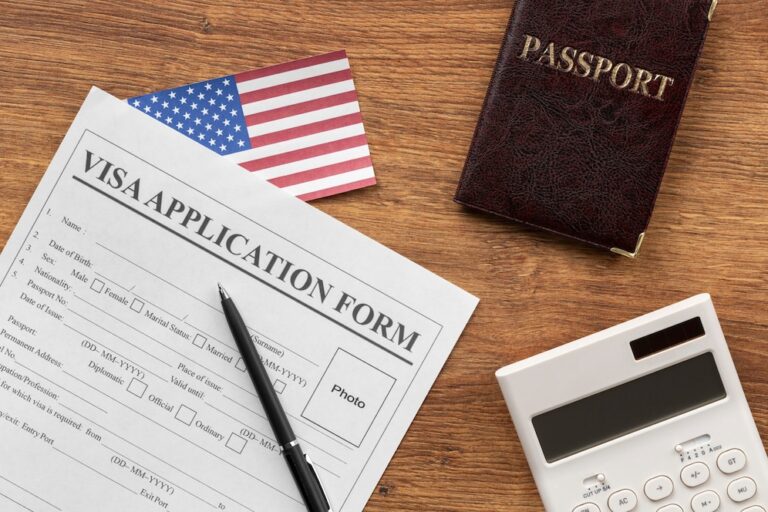
- Completed visa application form for the relevant category
- Employer’s approved labor certification or petition approval notice
- Proof of relevant work experience (references, prior pay stubs, or employer letters, if available)
- Educational or training certificates, if applicable (not usually required for H-2B housekeeping roles)
- Passport-style photos meeting U.S. visa specifications
- Proof of ties to your home country for temporary visas (H-2B, J-1), showing intent to return after the temporary period
- Medical exam results, if required for your visa category
- Biometrics appointment confirmation
- Visa interview appointment confirmation at a U.S. embassy or consulate
Salary Expectations and Cost of Sponsorship
Housekeeping wages vary by state, employer type, and whether housing/meals are provided, but U.S. hospitality and healthcare housekeeping roles commonly fall in the range of roughly $14–$20 per hour, with resort and healthcare-adjacent roles sometimes at the higher end due to prevailing wage requirements. For H-2B and EB-3 roles, the employer must offer at least the government-determined “prevailing wage” for that job and location — they cannot legally pay you less just because you’re on a sponsored visa.
Who pays what? This is the question most job seekers actually want answered:
- Labor certification and core petition fees (the government filings that make the job legally sponsorable) are generally the employer’s legal responsibility, not the worker’s.
- Visa application fees and interview fees at the embassy or consulate are usually paid by the worker, unless the employer agrees to cover them as part of a relocation package.
- A relocation package with visa sponsorship — flights, temporary housing, or a signing allowance — is offered by some hospitality employers (especially for seasonal resort roles that include staff housing) but is not guaranteed and should always be confirmed in writing before you accept.
- Immigration lawyer fees, if you choose to hire one for guidance, are a separate cost — some employers cover their own attorney costs for petition filing, but a personal immigration lawyer for work visa questions is typically a cost you’d bear if you want independent advice.
If an employer or recruiter asks you to personally pay for the labor certification process itself, treat that as a serious warning sign.
Common Mistakes That Get Applications Rejected
- Applying without confirming the visa category first. Assuming any job posting mentioning “sponsorship” means green-card sponsorship, when it may only be seasonal H-2B.
- Missing seasonal timing. H-2B has strict filing windows tied to the employer’s start-of-need date; applying too late in the season often means missing that year’s cap or window entirely.
- Incomplete or inconsistent paperwork. Names, dates, and job titles that don’t match across your passport, resume, and employer petition cause delays or denials.
- Weak proof of “temporary intent” for H-2B or J-1. Since these are non-immigrant (temporary) visas, applicants sometimes get denied at the interview stage for failing to show they intend to return home after the job ends.
- Paying unlicensed “visa agents.” Many rejected or scammed applicants worked with intermediaries who were not licensed and had no real relationship with the employer.
- Ignoring the employer’s ability to pay. For EB-3 green-card sponsorship, USCIS closely reviews whether the employer can actually afford the offered wage — a financially weak or very new employer can slow or sink a case through no fault of the worker.
Timeline: How Long Does Sponsorship Take in 2026?
H-2B (seasonal): Employers typically need to secure a temporary labor certification a few months before the season starts, and current government data shows the H-2B annual cap of 66,000 visas, split into two half-year allocations of 33,000 each, filling up early most years — with supplemental visas released later in the year to cover excess demand. Practically, this means workers should apply for seasonal roles several months ahead of the season, not weeks before.
EB-3 “Other Workers” (green card): This is a multi-stage, multi-year process. Current data shows PERM labor certification alone is taking roughly 16 months to process, followed by several more months for the I-140 petition, and then a wait for a visa number to become “current” based on your priority date (the date your employer’s PERM was filed — this date marks your place in line). For most countries, total timelines are commonly cited in the range of roughly 2 to 4 years from start to green card; workers born in countries with especially high demand, such as India, can face waits stretching well beyond a decade due to per-country visa caps. This is a real structural feature of the system, not a reflection of your application quality.
J-1 (exchange/cultural work): Considerably faster — often a matter of weeks to a few months, since it doesn’t go through the labor certification process at all.
FAQ: People Also Ask
Can I get a U.S. housekeeping job with no experience and visa sponsorship? Some seasonal H-2B hospitality employers hire entry-level housekeeping staff with minimal formal experience, especially for high-turnover roles, but “no experience visa sponsorship jobs” are more competitive than they sound — reliability, physical ability, and flexibility often matter more than a resume.
Do U.S. companies really sponsor housekeepers for a green card? Yes, through the EB-3 “Other Workers” category, but it is a long, employer-driven process, not something you can apply for directly without a sponsoring employer and completed labor certification.
Is work visa sponsorship for [my nationality] different depending on where I’m from? The visa process itself is the same regardless of nationality, but green-card wait times (EB-3) differ dramatically by country of birth due to per-country annual caps — applicants from a handful of high-demand countries face much longer waits than applicants from most other countries.
Do I need an immigration lawyer for work visa sponsorship? Not always. Employers usually handle their own legal filings through their own immigration counsel. You may still want your own immigration lawyer for work visa guidance if your situation is complicated (prior visa denials, unclear immigration history, or interfiling between visa categories).
Are relocation packages with visa sponsorship common for housekeeping jobs? Some seasonal resort and hotel employers include staff housing, and occasionally travel assistance, as part of the offer — but it’s employer-specific and should be confirmed in writing, not assumed.
How do I know if a “visa sponsorship” job posting is a scam? Be cautious of postings that ask for upfront payment before any job offer, that guarantee visa approval, or that pressure you to send passport copies and money together. Legitimate employers sponsor first and collect standard, limited fees later in the process.
Which is faster: H-2B or EB-3? H-2B is much faster to start working (months, not years) but is temporary and seasonal. EB-3 takes years but leads to permanent residency. Many workers use H-2B seasonal experience to build a track record before an employer considers EB-3 sponsorship.
Action Steps: What to Do Next
- Decide whether you’re looking for seasonal work now (H-2B) or long-term permanent residency (EB-3), since they require different job searches and timelines.
- Start applying directly to hotel groups, resorts, and healthcare facilities that explicitly mention visa sponsorship in their listings — avoid any listing that asks for payment before an offer.
- Get any job offer and sponsorship commitment in writing before making financial decisions like flights or paying visa fees.
- If your situation involves a prior visa issue, unclear status, or a complex case, consult a licensed immigration attorney before you sign anything.
- Track official processing times and visa bulletin updates directly through USCIS, the Department of Labor, and the Department of State rather than relying solely on third-party sites.
I am not a lawyer. This content is for informational purposes only. Consult official government sources (USCIS, the U.S. Department of Labor, and the U.S. Department of State) or a licensed immigration attorney before making any visa or relocation decisions.